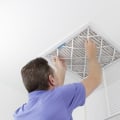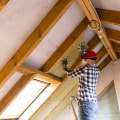
Most of our Oviedo service calls that start with “it smells musty” end up in the attic. A flex duct joint failed somewhere, unconditioned attic air has been pulling into the supply stream for months, and mold followed the moisture. By the time the smell reaches the register, the problem has been running for a while.
It happens here more than most people expect, and the reasons are specific to this market. Oviedo's residential neighborhoods went up largely during the late 1990s and early 2000s, when flex duct was the standard installation choice in Seminole County. Those systems weren't designed for 25-plus years of Florida attic conditions. Adhesive tape degrades. Joints sag and separate. And unlike markets where a furnace gives the system a seasonal break, Central Florida runs air conditioning every month of the year. The stress on aging ductwork is continuous.
When a joint opens, the air handler's return side pulls hot, humid attic air into the supply stream instead of drawing from the conditioned living space. Attic temperatures in Oviedo exceed 130°F on a typical July afternoon. The humidity averages between 70 and 80 percent through the summer months. That air hits the cooler interior duct surface, condenses, and gives mold exactly what it needs. According to the EPA, mold can colonize a damp surface within 24 to 48 hours. See the community profile for Oviedo, Florida for context on the city's residential growth history and why so many homes here share the same construction-era duct systems.
This page explains what HVAC air ductwork repair in Oviedo actually involves, what shapes the cost, and how to tell whether the contractor you're considering knows how to find a problem rather than just describe one.
TL;DR Quick Answers
Air Duct Repair in Oviedo
HVAC air duct repair in Oviedo restores failed flex duct joints, collapsed duct sections, and torn liners that allow humid attic air into the supply stream — the leading cause of mold growth in Central Florida duct systems. We start every repair with a pressure test to map actual failure points before touching the duct. Scope typically includes mastic joint sealing, flex duct section replacement, and post-repair pressure verification.
Top Takeaways
Oviedo's year-round HVAC runtime and subtropical humidity put flex duct systems under continuous stress. Regular inspection is essential, not optional.
Small duct leaks pull unconditioned, humid attic air into the supply stream. That's exactly the moisture condition mold needs to establish.
The EPA confirms mold can colonize a damp surface within 24 to 48 hours. The faster a leak is sealed, the lower the risk of established growth.
According to ENERGY STAR, leaky ducts can reduce your system's heating and cooling efficiency by up to 20 percent. Duct repair is an energy investment as much as a health one.
HVAC air ductwork repair in Oviedo is a distinct scope from duct cleaning and Aeroseal sealing. Those differences matter when choosing a contractor.
Verify any HVAC contractor's license at MyFloridaLicense.com and confirm NADCA certification before scheduling work.
Pressure testing, not visual inspection, is how a qualified technician maps actual duct failure. Ask before you hire anyone.
Why Air Ducts in Oviedo Homes Are Especially Mold-Prone
Oviedo's residential neighborhoods reflect the growth Seminole County saw through the late 1990s and early 2000s. Flex duct was the standard installation choice during those years. It's cost-effective and straightforward to run through an attic, which is why builders relied on it. It's also the duct type that degrades in ways the homeowner can't see from inside the house.
The adhesive tape used to secure flex duct connections in the 1990s wasn't built for 30 years of Florida attic conditions. It fails. Joints sag. Liner compresses at bends and eventually tears. Once a connection opens, the duct is no longer a closed system, and in a climate like Oviedo's, that matters immediately. Central Florida runs air conditioning every month of the year. The pressure on these aging joints is unrelenting.
Attic temperatures in Oviedo can exceed 130°F by early afternoon in July. Humidity averages between 70 and 80 percent through the summer. When the return side develops a leak, it pulls that hot, humid air into the supply stream instead of drawing from the conditioned living space. The cooler interior duct surface becomes a condensation point. We've tracked this exact pattern in homes across the area, finding mold in attic duct sections that had been quietly failing through an entire cooling season while the homeowner chased the smell with filter changes and register cleaning.
How Damaged Ductwork Creates Mold Conditions
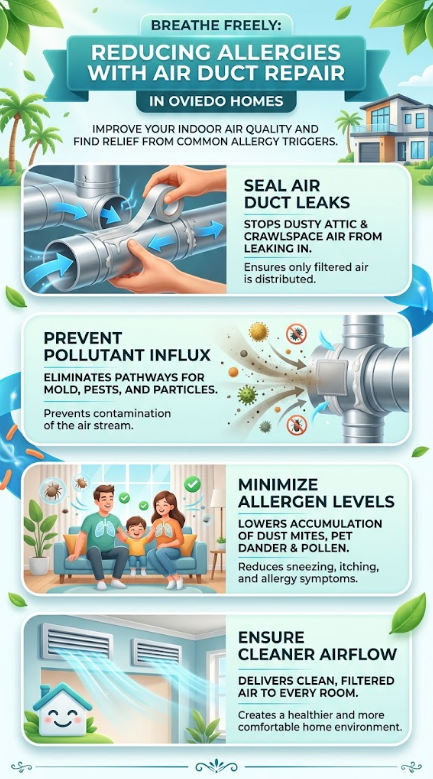
Duct systems run under pressure. The air handler creates negative pressure on the return side and positive pressure on the supply side. A failed joint disrupts that balance in both directions: return leaks pull unconditioned air into the system, and supply leaks push conditioned air into the attic before it reaches the room it was meant to serve.
The interior surface of a flex duct, particularly the fiberglass liner, holds moisture once it gets wet. In sections where airflow is reduced because of a kink or collapse, that surface doesn't dry between HVAC cycles. Mold doesn't need much time or much moisture. It needs a damp surface in a dark space, and damaged ductwork provides both. The reason these problems run so long without detection comes down to location. Most flex ducts in Oviedo homes sit in attic spaces nobody visits. By the time the smell reaches the register, the colony has usually been in place for months.
HVAC Duct Repair Services in Oviedo — What the Work Actually Involves
A professional duct repair visit starts with a diagnostic, not an estimate. We pressure-test the system to map where leakage is occurring before we touch anything. Most failure points aren't visible from the access hatch. They're at joints buried under blown-in insulation or at connections behind the air handler cabinet that haven't been checked since the system went in.
Once we know where the system is failing, the repair takes the form the damage requires. Disconnected joints get reconnected and sealed with mastic compound rather than tape. Mastic bonds permanently and holds through Florida attic temperature extremes; tape doesn't. Collapsed or kinked sections get replaced. Liner failures that expose the duct interior to the attic get patched or replaced depending on extent.
Aeroseal is a separate process, and the distinction matters. Duct repair addresses physical failures: joints that pulled apart, sections that collapsed. Aeroseal injects an aerosolized sealant throughout the duct network to close diffuse micro-leakage at pinholes and seam gaps that physical repair won't reach. Many homes benefit from both.
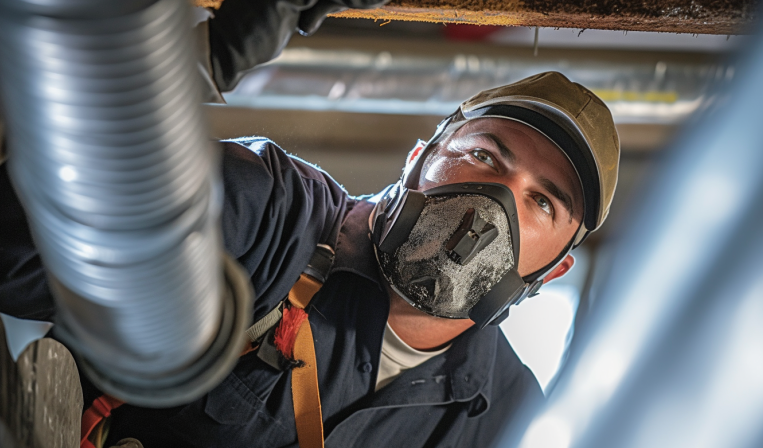
“In Oviedo homes built during Seminole County’s growth years, the flex duct joints are the first thing we check. They fail silently, and by the time the homeowner notices something’s wrong, the mold has had months to get established in sections of duct the air handler cycles through every hour.”
Essential Resources
1. Schedule Your Oviedo HVAC Air Ductwork Repair Assessment
Our Oviedo service page covers the full diagnostic, sealing, and repair process. If you want to understand what a professional duct inspection actually involves before you call, start here.
Source: Oviedo HVAC Air Ductwork Repair — Filterbuy HVAC Solutions
2. Understand Oviedo's Community and Housing Context
Oviedo's residential development history and position within Seminole County explain why so many homes from the late-1990s and early-2000s growth period share the same construction-era duct systems.
Source: Oviedo, Florida — Wikipedia
3. What the EPA Says About Mold and Moisture Control
The EPA's central resource on mold growth, moisture conditions, and what homeowners should do when they find evidence of indoor mold. Worth reading before you assume the smell is coming from somewhere else.
Source: Mold — U.S. Environmental Protection Agency
4. Find a NADCA-Certified Contractor and Know What to Ask
NADCA's homeowner guide walks through the contractor selection process, what questions to ask before any duct work begins, and how to confirm credentials. Read it before you hire anyone to touch your duct system.
Source: Homeowner’s Guide to Air Duct Cleaning — NADCA
5. The DOE's Guidance on Duct Leakage and Energy Loss
How duct leakage affects heating and cooling efficiency, what repair and sealing options exist, and why fixing a leaky system typically costs less than running one.
Source: Minimizing Energy Losses in Ducts — U.S. Department of Energy
6. Verify Any Florida HVAC Contractor's License Before You Hire
Florida DBPR's public lookup confirms that any contractor working in your home holds a valid state license. It takes two minutes and it matters more than the contractor's website.
Source: Florida DBPR — Verify a Contractor License
7. Answers to the Most Common Duct Service Questions
NADCA's residential FAQ covers what to expect from duct work, how to evaluate contractor bids, and what a legitimate scope of work looks like. Useful reading before anyone walks through your door.
Source: NADCA — Frequently Asked Questions About Residential Air Duct Cleaning
Supporting Statistics
1. In typical homes, between 20 and 30 percent of the air moving through the duct system is lost to leaks and poorly installed ducts.
We've confirmed this pattern in field diagnostics across Oviedo: systems running hard, rooms that won't reach setpoint, pressure tests returning leakage well above what homeowners expected. ENERGY STAR puts a number to what we see in practice.
Source: ENERGY STAR Duct Sealing Resource
2. Wet or damp materials can be colonized by mold within 24 to 48 hours of moisture exposure.
In Oviedo's climate, a duct leak running through even a short stretch of Florida summer creates that window fast. Waiting on a repair because the smell isn't bad yet is exactly the delay that turns a sealing job into a remediation conversation.
Source: A Brief Guide to Mold, Moisture, and Your Home — U.S. Environmental Protection Agency
3. Ducts leaking conditioned air into unconditioned spaces can add hundreds of dollars per year to heating and cooling costs.
The billing pattern usually tells the story before the homeowner connects it to the duct system: bills climbing with no change in occupancy, no thermostat adjustments, no obvious explanation. That's the duct system working against itself.
Source: Minimizing Energy Losses in Ducts — U.S. Department of Energy
Final Thoughts and Opinion
In our experience, duct repair is the most consistently under-diagnosed problem we find in Central Florida HVAC systems. Homeowners replace filters, schedule tune-ups, upgrade equipment when it fails. The duct network that actually moves conditioned air through the house goes uninspected for years. In Oviedo's climate, that gap has real consequences.
Mold is a word that makes people picture bathrooms and obvious water damage. But in a home with an aging flex duct running through a 130-degree attic twelve months a year, the ductwork is one of the most likely places for mold to establish quietly: fed by consistent moisture, cycling through every room whenever the system runs, in spaces nobody visits.
The homeowners we've seen avoid the harder remediation conversations are almost always the ones who acted on an early signal. A room that wouldn't cool, a bill that crept up for no clear reason. They scheduled an inspection before things became obvious, and what we found was manageable. A duct system in an Oviedo home built in 1998 is approaching 30 years old. If it's never been looked at, there's almost certainly something worth finding.
Frequently Asked Questions
What are the signs that my Oviedo home's air ducts need repair?
The most common: rooms that won't hold temperature despite a functioning HVAC system, a musty or stale smell from supply registers, condensation around vent covers, and utility bills that have increased without a clear cause. Any one of those warrants a diagnostic inspection. More than one means it's overdue.
Is HVAC duct repair the same as duct cleaning?
No. Duct cleaning removes accumulated debris, dust, and biological growth from inside the duct surfaces. Duct repair addresses structural failures: disconnected joints, torn liner, collapsed sections, failed seals. Many homes benefit from both, but they're different scopes of work. Don't let a contractor bundle them automatically. Each should be evaluated on its own.
How long does HVAC duct repair take?
A standard diagnostic inspection runs one to two hours for a typical Oviedo home. Repair time varies after that. Straightforward mastic sealing at a few accessible joints can often be completed the same visit. Damage involving section replacement, or failure points buried deep in the attic under insulation, may require a follow-up appointment.
Can I seal my own air ducts instead of hiring a contractor?
HVAC-grade mastic is available to homeowners and is the right material for duct joints. The practical problem is that most flex duct failure points in Oviedo homes sit in attic spaces, often under blown-in insulation, and rarely at the locations that look suspicious from the register end. Without a pressure test to map where leakage is actually occurring, DIY efforts usually treat the visible spots and leave the real problem untouched.
How do I verify an HVAC contractor's license in Florida before hiring?
The Florida Department of Business and Professional Regulation maintains a public license lookup at MyFloridaLicense.com. Enter the company or individual's name and confirm the license type, current status, and any disciplinary history. Any contractor doing HVAC work in Florida should hold a valid CAC license or work under a licensed qualifying agent.
Stop Guessing What's Growing in Your Ducts — Get a Straight Answer
Our team diagnoses HVAC duct failures throughout Oviedo with pressure testing, not guesswork, and we'll tell you exactly what's driving the mold risk in your home before any repair work begins.Here is the nearest branch location serving the Greenacres FL area…
Filterbuy HVAC Solutions - West Palm Beach FL
1655 Palm Beach Lakes Blvd ste 1005, West Palm Beach, FL 33401
(561) 448-3760